PATRICIA SWEETOW GALLERY at MSP, San Francisco participates in NEXUS 2026
Press Release
NEXUS 2026, San Francisco
Artists: Demetri Broxton, Ramekon O’Arwisters, Reyah and Jamele Wright Sr.

PATRICIA SWEETOW GALLERY at Minnesota Street Projects!
Location: Minnesota Street Projects, 1275 Minnesota Street, Suite 211, San Francisco
Exhibition Dates: Thursday, October 1 – Saturday, October 10, 2026
Reception: Saturday, October 3rd, 5-7pm
In Conversation: Saturday, October 3rd, at 2pm. Demetri Broxton, Ramekon O’Arwisters, and Reyah. Join us for a free-ranging discussion about the ideas and materials of their respective practices.
Closing Mixer: Saturday, October 10th, 2:30-5pm
PATRICIA SWEETOW GALLERY is thrilled to do a month-long pop-up at Minnesota Street Projects, where the gallery will present 2–2-week exhibitions. The First Exhibition, in celebration of NEXUS, a program of MoAD, features artists Demetri Broxton (Oakland), Ramekon O’Arwisters (San Francisco), Reyah (Los Angeles), and Jamele Wright Sr (Atlanta). The artists included in the exhibition employ, or reveal textiles as a medium of heritage, culture, and social politics. Their works explore diasporic and personal histories, non-conforming gender expectations, and our cultural expression and suppression.
ABOUT THE ARTISTS

Demetri Broxton’s first exhibition with PSG was in 2018, where he debuted embellished boxing gloves, unfolding a complex narrative centered on the mythic stature of Black boxers, from Jack Johnson to his grandfather, who was a boxer during WWII. Broxton’s sculpture, whether gloves, tapestries, or robes, are hand-beaded, sequined, and sewn by the artist, laced with amulets of power, transgression, healing, peril, and protection. In the tradition of contemporary artists such as Myrlande Constant from Haiti, whose beaded tapestries tell of Vodou and Haitian history, or Igshaan Adams from Cape Town, whose abstract woven, beaded tapestries speak of post-apartheid South Africa, Demetri Broxton’s tapestries and sculpture tell of personal, community, and diasporic stories of Black America’s struggle and triumph.
Broxton recently closed his first one-person museum exhibition, Ancient Echoes, curated by Key Jo Lee at MoAD. Demetri Broxton is the executive director for Root Division, San Francisco. Prior to Root Division, Broxton served for 12 years as the Education Director at the Museum of the African Diaspora (MoAD) in San Francisco, as the museum steadily grew from a regional museum to a nationally recognized leader in Black contemporary art and culture.
Born and raised in Oakland, CA, Broxton earned a BFA at UC Berkeley in 2002 with an emphasis in painting. Exhibitions include: Strike Fast, Dance Lightly: Artists on Boxing, Norton Museum of Art, Palm Beach, FL; allegedly, the past is behind us, ICA San Jose, CA; Crafting Radicality: Bay Area Artists from the Svane Gift, de Young Museum, San Francisco; and Second Skin, the Art Gallery of Alberta, Edmonton, Canada. Recent press includes Hyperallergic, 2026; CARLA, 2025; Artforum; KQED 2026 San Francisco; Culture Magazine, and L’Officiel.

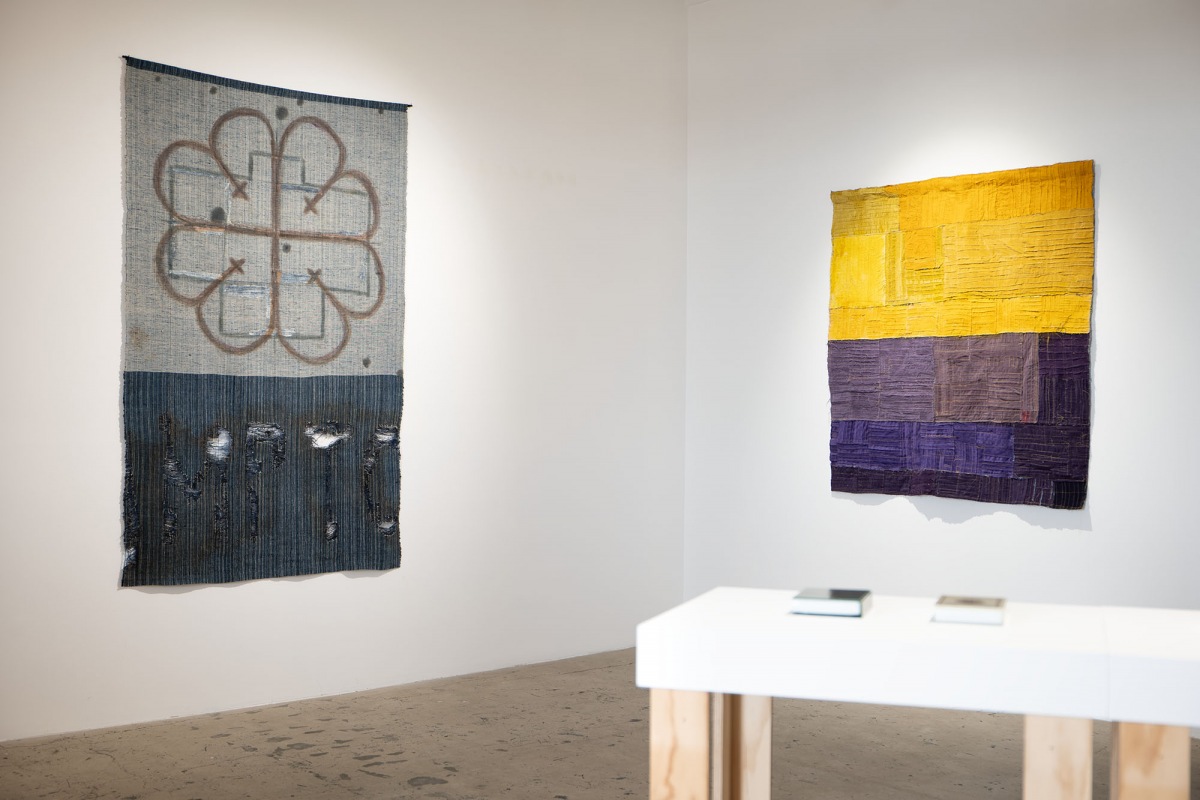
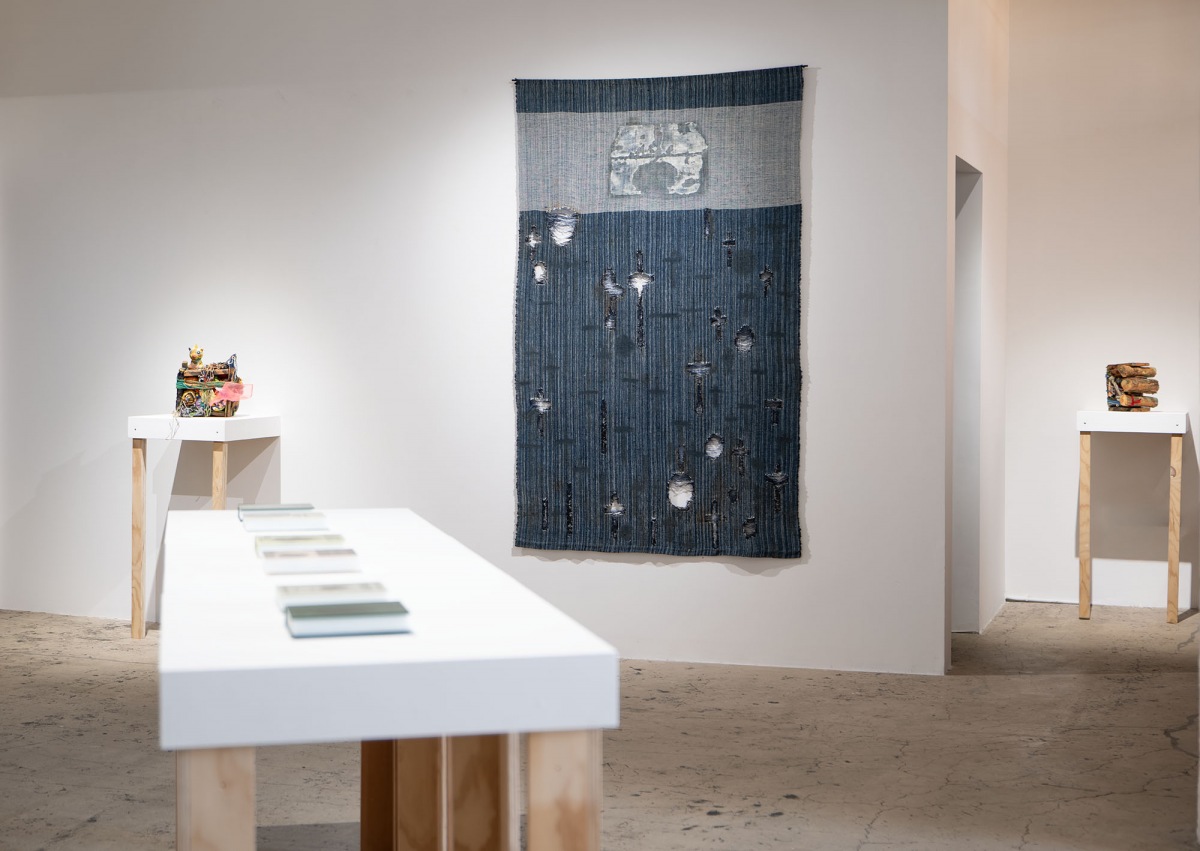
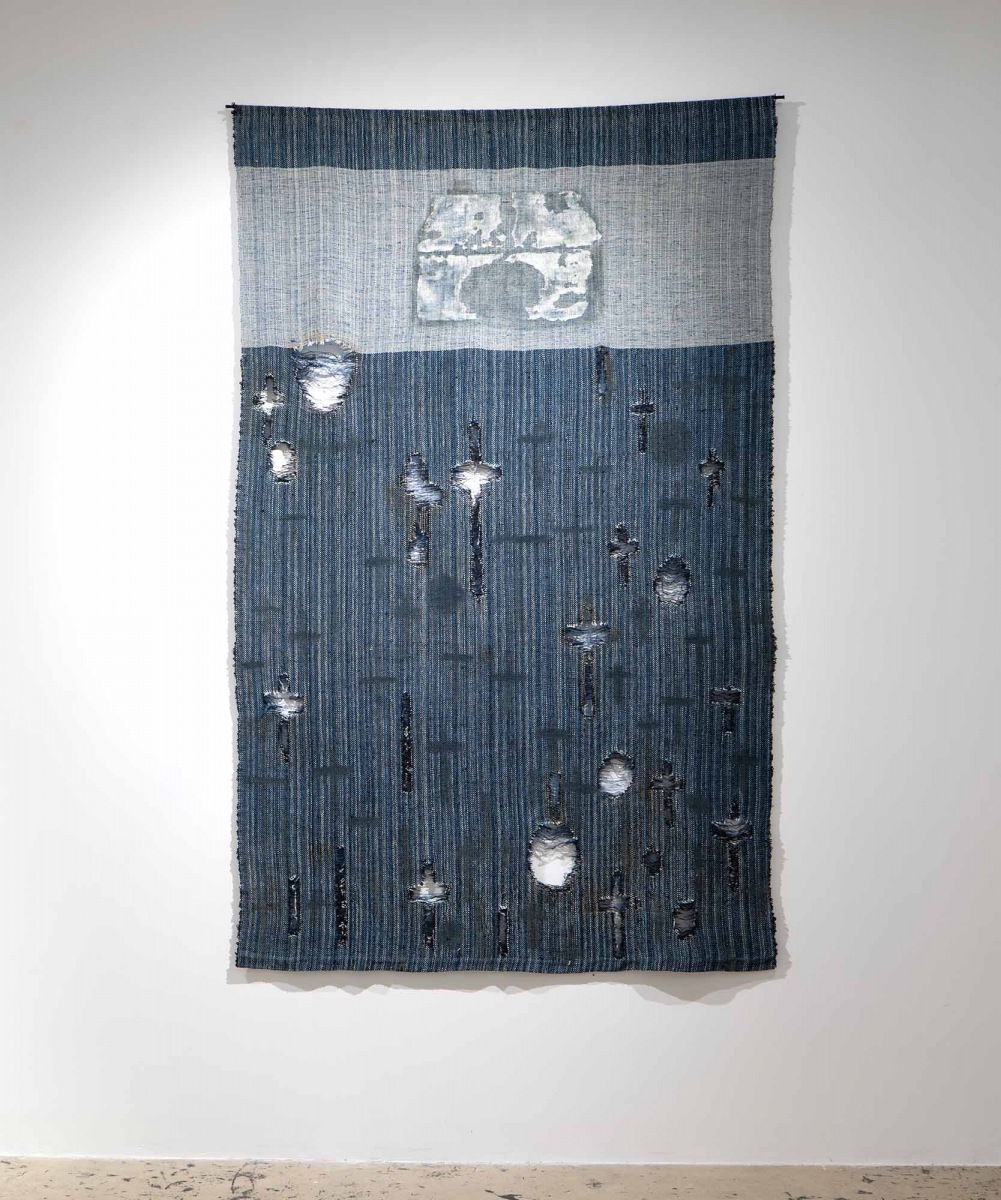
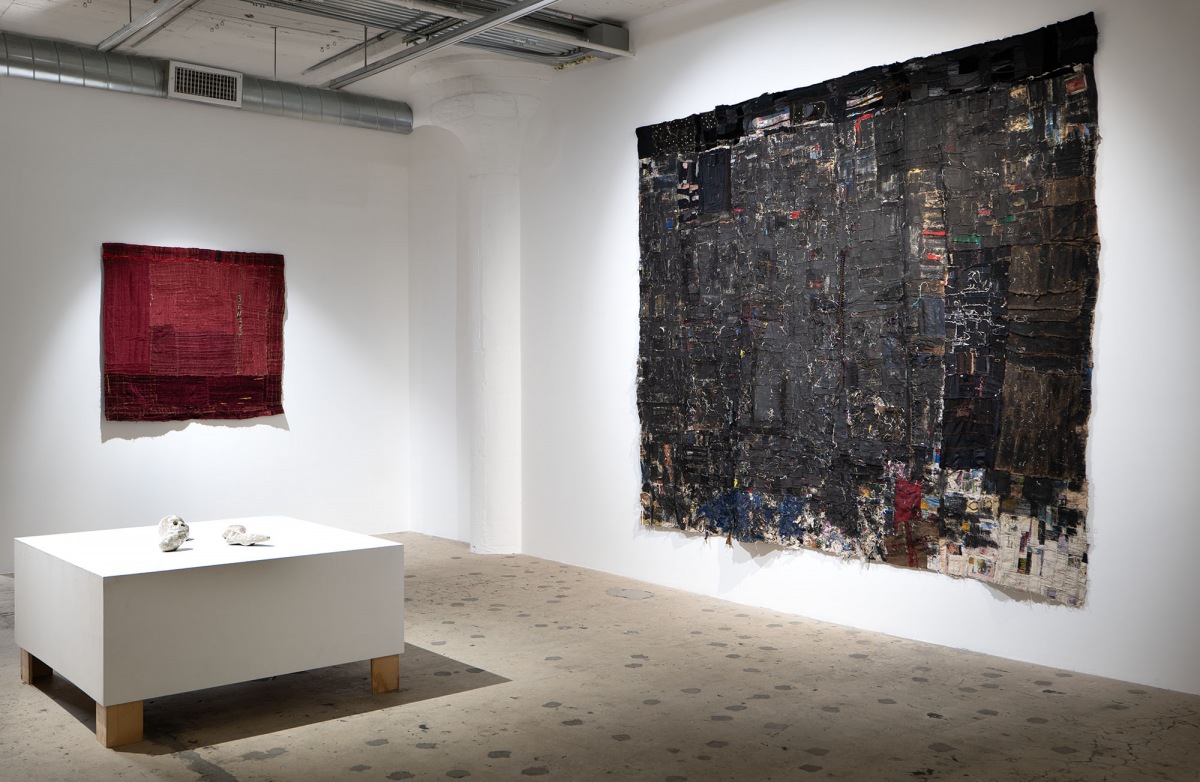
SCHISM, Ramekon O’Arwisters 2025 exhibition at PSG, was a fracture, division, disharmony in beliefs or rules by which we live and understand relationships, politics, religion, community. The choice of SCHISM as a title was not so much a reflection of discord within O’Arwisters but an acknowledgement of chaotic shifts and swings in predictability and safety. Targeting, overreach, and coded responses are not new to Black Americans; finding ways to navigate being Black and Queer between hazards is present in this pop-up, a watery ground of coded abstraction. On view will be the artists’ iconic bound leather sculpture, Black on Black; and tapestries from the Bound in Black series
Born in Kernersville, North Carolina, Ramekon O’Arwisters earned a M.Div. from Duke University Divinity School in 1986. Residencies include the 2021 McLaughlin Foundation Award for The Project Space at Headlands Center for the Arts, Artist-in-Residence program, the de Young Museum Artist in Residence; the Djerassi Resident Artists Program; Recology San Francisco Artist in Residence Program, and the Vermont Studio Center.
Grants and Awards include a Pollock-Krasner Foundation Grant for 2020/21; Artadia: The Fund for Art and Dialogue, NY; the San Francisco Foundation; the San Francisco Arts Commission Cultural Equity Initiatives Program; Black Artists Fund, Sacramento; and the Eureka Fellowship awarded by the Fleishhacker Foundation in San Francisco.
Recent museum exhibitions include In Between, SFMoMA, Koret Education Center, through May 27; Unbound, Art, Blackness and the Universe, curated by Key Jo Lee, at the Museum of the African Diaspora (MoAD); House of, Craft Contemporary Museum Los Angeles (2025); Crafting Radicality: Bay Area Artists from the Svane Collection, DeYoung Museum of Art (2023); San Francisco Museum of Craft and Design, FIGHT AND FLIGHT: CRAFTING A BAY AREA LIFE; American Museum of Ceramic Art (AMOCA), Making in Between: Gender Identities in Clay (MIB:GIC); San Jose Museum of Quilts & Textiles, Queer Threads and a solo exhibition at the Museum of the African Diaspora, Freeform and Razor Sharp. Upcoming museum exhibitions include Ramekon O’Arwisters, In Between, SFMoMA Koret Education Center, San Francisco and EnMasse, Accumulation & Abundance in Contemporary Sculpture at the Fuller Craft Museum in 2026, curated by Beth McLaughlin. Recent press includes Hyperallergic 2025; “Artist Takeover,” Artillery Magazine 2025; Essence Magazine 2025; “In the Studio”, a video production of the Fine Arts Museums San Francisco, plus more.
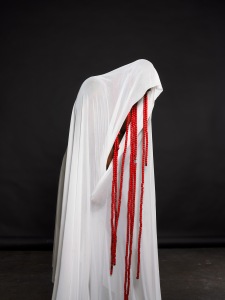
PSG successfully debuted a stunning series of archival pigment prints from Reyah, a self-taught artist, at Untitled Art 2023. Reyah’s body of work in self-portraiture represents a multi-year timeline of building knowledge and experience with their medium-format camera. Their photography explores cultural iconography, and staged narrative to explore gender, childhood trauma, religion, and the Black body. The artist takes agency with all aspects of their process, constructing the costumes, lighting their body, and finally exposing the shot. Reyah was a guest speaker in a series produced at MoAD, In the Artists Studio—Reyah. Their work is held in national collections.

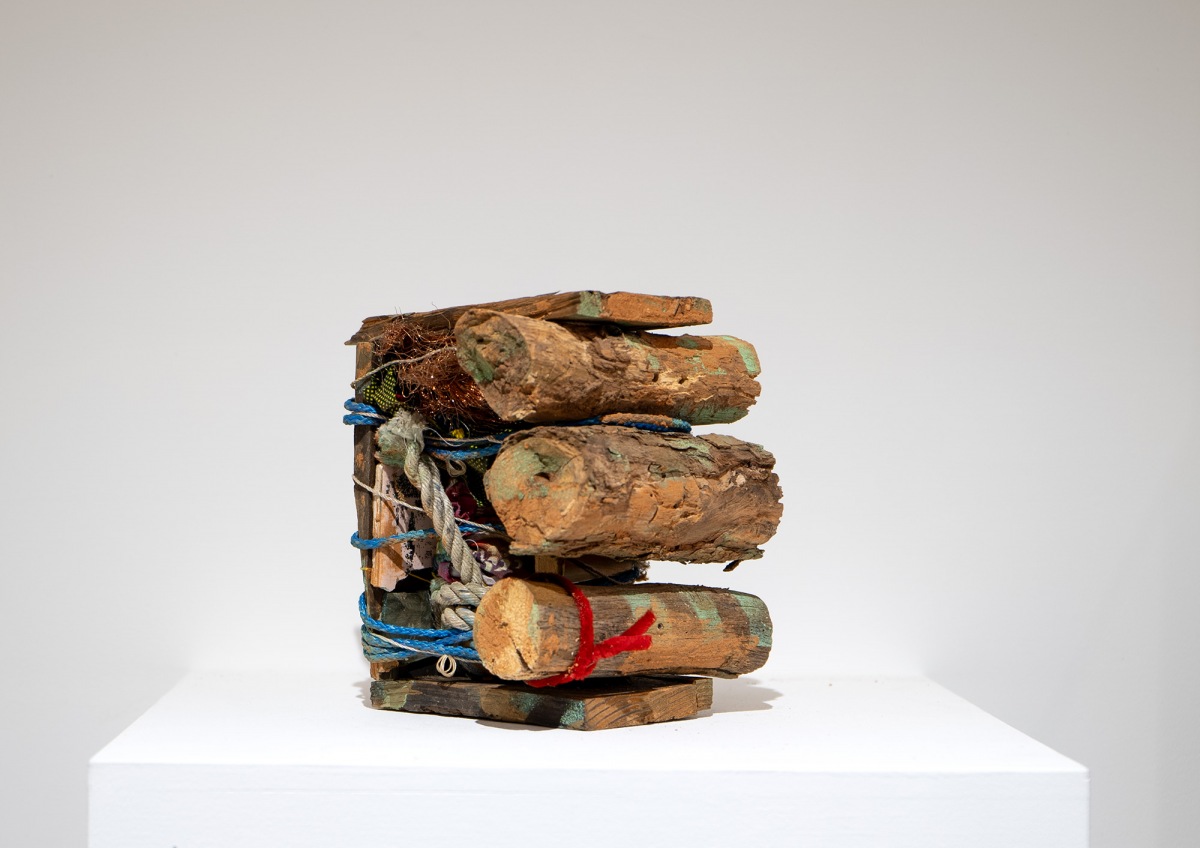
Bundles emerged during a pivotal moment in Jamele Wright Sr’s practice, extending the ideas first explored in In– Transit while laying the foundation for later bodies of work including ReBORN and Levitate. Created after returning to Atlanta from graduate school in New York, the series grew from an ordinary experience that unexpectedly opened onto a larger historical reflection.
“Preparing for the move home, I found myself trying to fit everything I had accumulated over two years into my Honda Pilot. Paintings, books, clothing, furniture, and studio materials were compressed into every available space. As I packed, I began thinking about the difficult choices faced by so many Black Americans escaping the violence and systems of control that defined the Jim Crow South, often carrying only what they could. My own journey was a reverse migration, but it became a point of entry into questions of movement, memory, sacrifice, and survival within the Black American vernacular experience.”
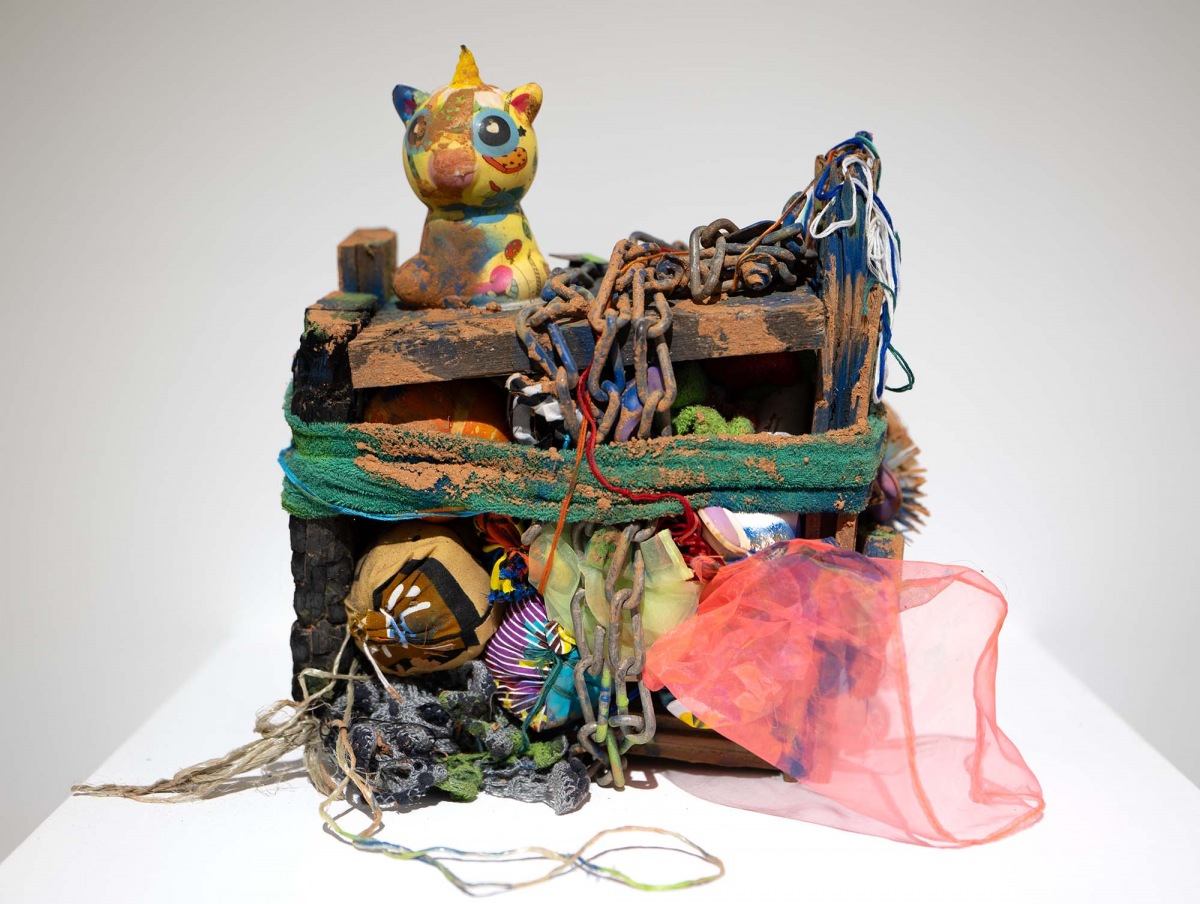
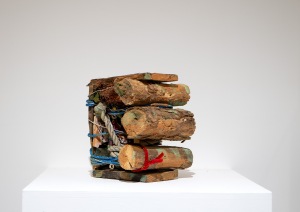
Constructed from found wood, Georgia red clay, rope, discarded toys, architectural remnants, and hand sewn Dutch wax cloth pouches inspired by the protective qualities of gri gri bags, each sculpture gathers fragments of lived experience into bound forms. Spray paint became an essential material in this series, reflecting the influence of Hip Hop and its ability to sample, layer, and transform disparate cultural references into new forms. Like sampling, the sculptures assemble materials that retain their individual identities while generating new meaning through juxtaposition.
Born and raised in Ohio, at the age of 22 Jamele Wright, Sr. moved to Atlanta, Georgia. Realizing that there were many young artists not being represented Wright started a gallery called Neo Renaissance Art House. After curating the gallery for over a year Jamele was inspired to pursue his own artistic career. After a number of solo and group exhibitions Wright graduated from Georgia State University with a B.A. in Art History, concentrating in African and African American Contemporary Art. He received his MFA from the School of Visual Arts in Manhattan, New York. Residencies include MASS MoCA, the Vermont Studio Center and Golden Paint. Wright Sr. is represented in public and private collections.
Artist Page
Future Past Tense
Press Release
Future Past Tense
Artists: Esperanza Cortés, Cheryl Derricotte, Karen Hampton, Asa Jackson, Fay Ku
EXHIBITION DATES: Saturday, September 12 – October 30, 2026
*The gallery will be open on Saturdays (12-5pm) through the month of October. The exhibition continues with regular hours Nov. 4th through November 30th: (Wed-Sat: 11-6pm)
RECEPTION: Please join us for a celebratory reception for the artists on Saturday, September 12th from 3–5:30 pm
Conversation: Saturday, September 12th at 2 pm
Cheryl Derricotte, Karen Hampton and Asa Jackson.
* limited seating
PATRICIA SWEETOW GALLERY is pleased to present Future Past Tense with Esperanza Cortés (New York), Cheryl Derricotte (San Francisco), Karen Hampton (New Mexico), Asa Jackson (North Carolina) and Fay Ku (New York). The artists in this exhibition mirror historical and private chronicles to unmask past/future intersectionality. Their work posits that today is embedded in the immutable shadows of yesteryear.

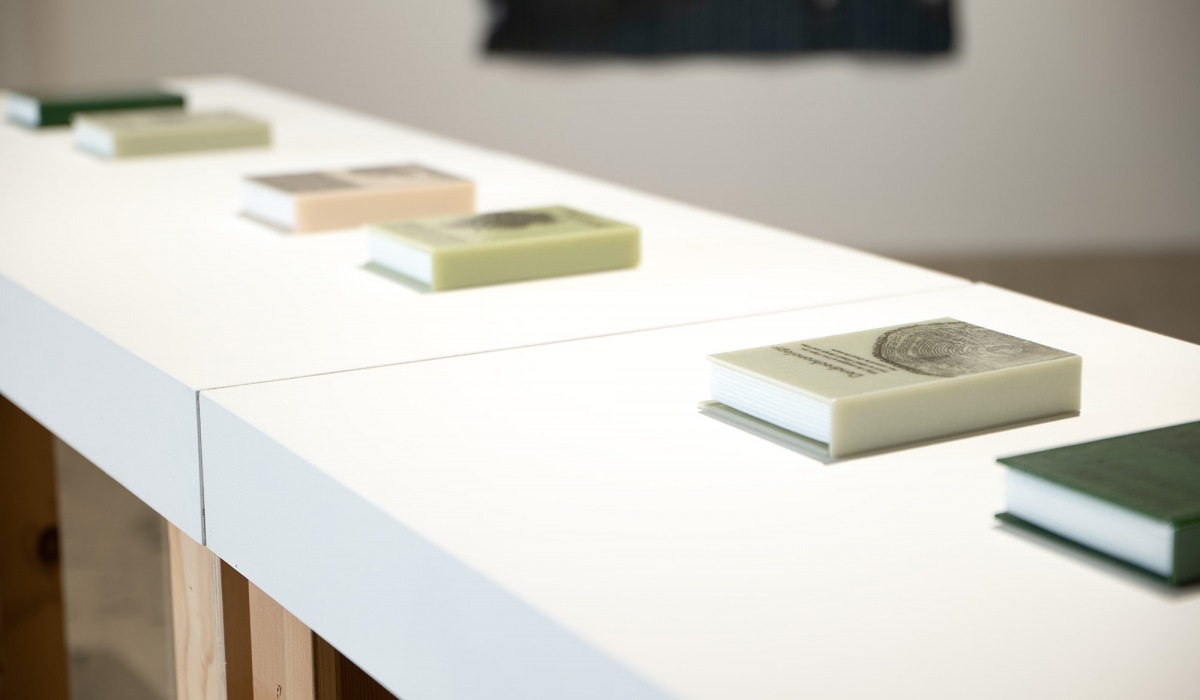
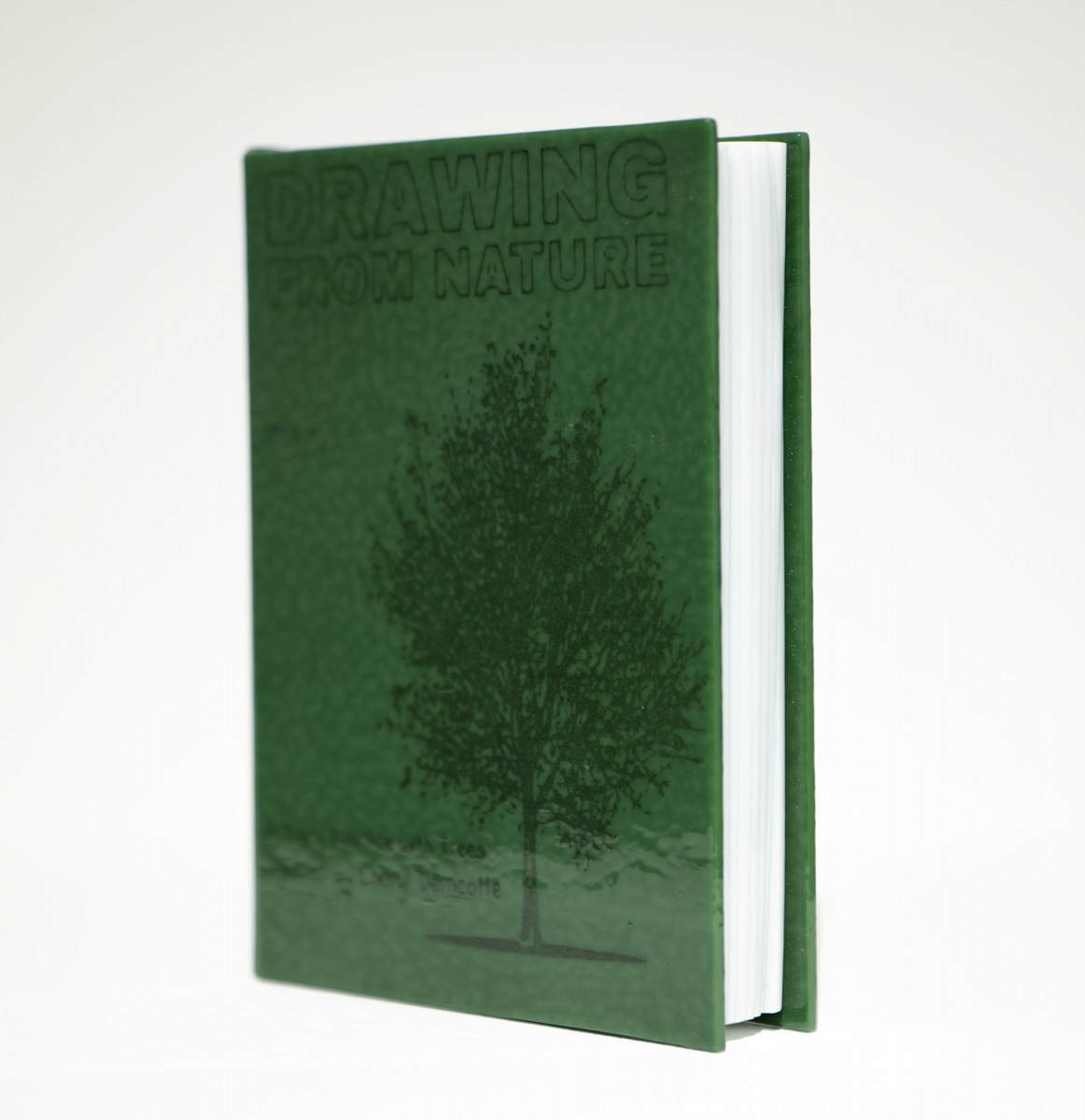
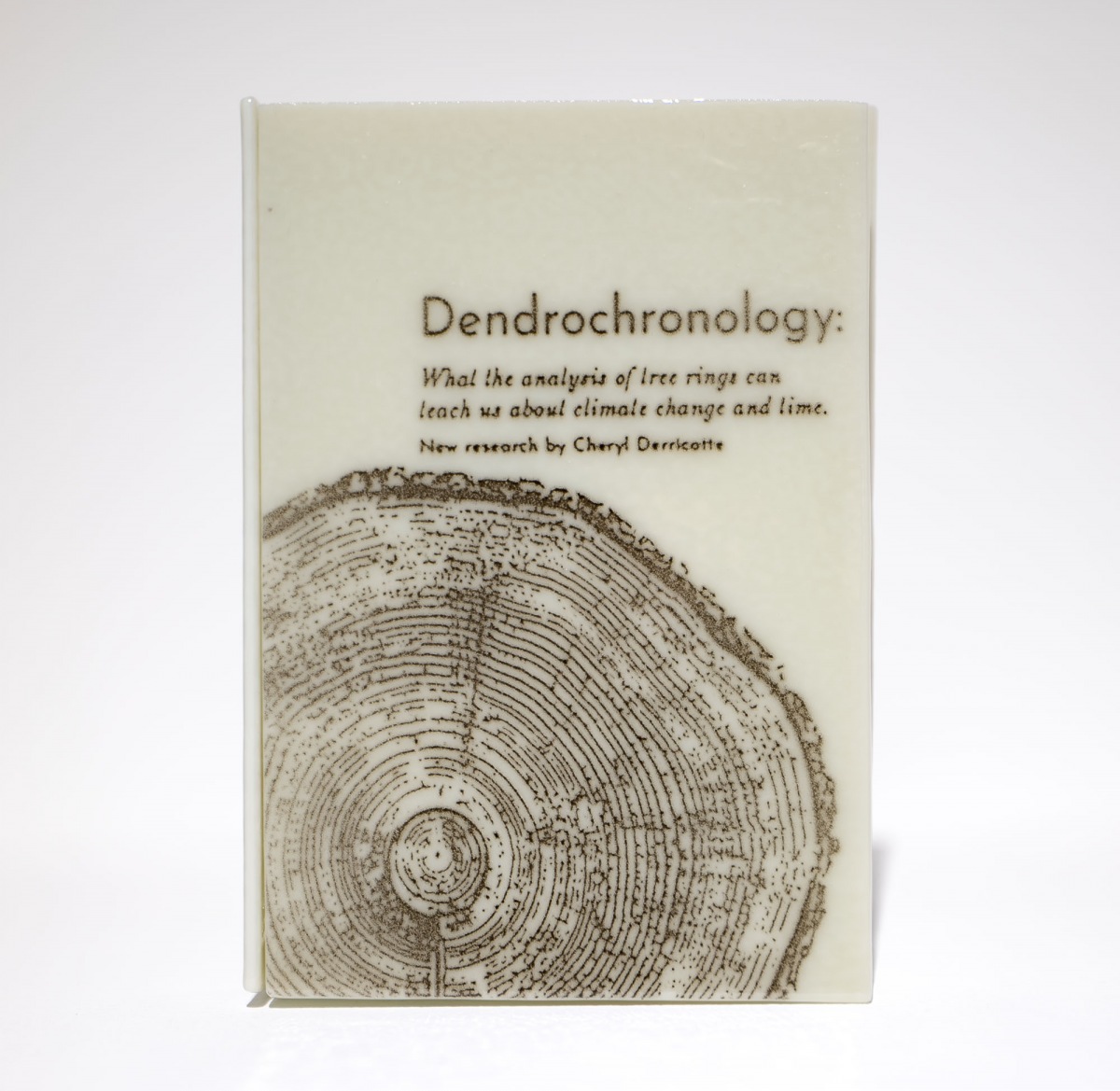
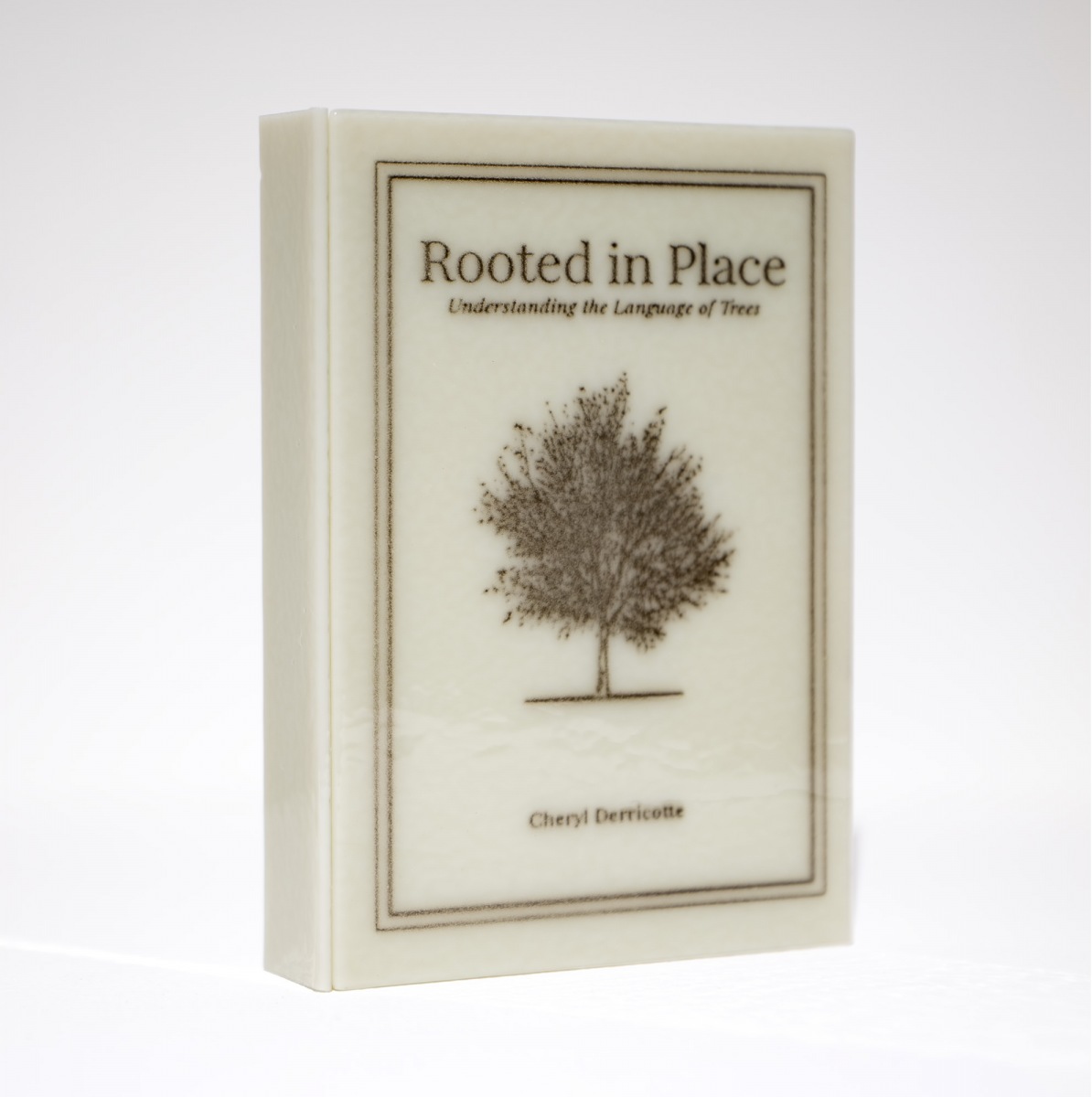
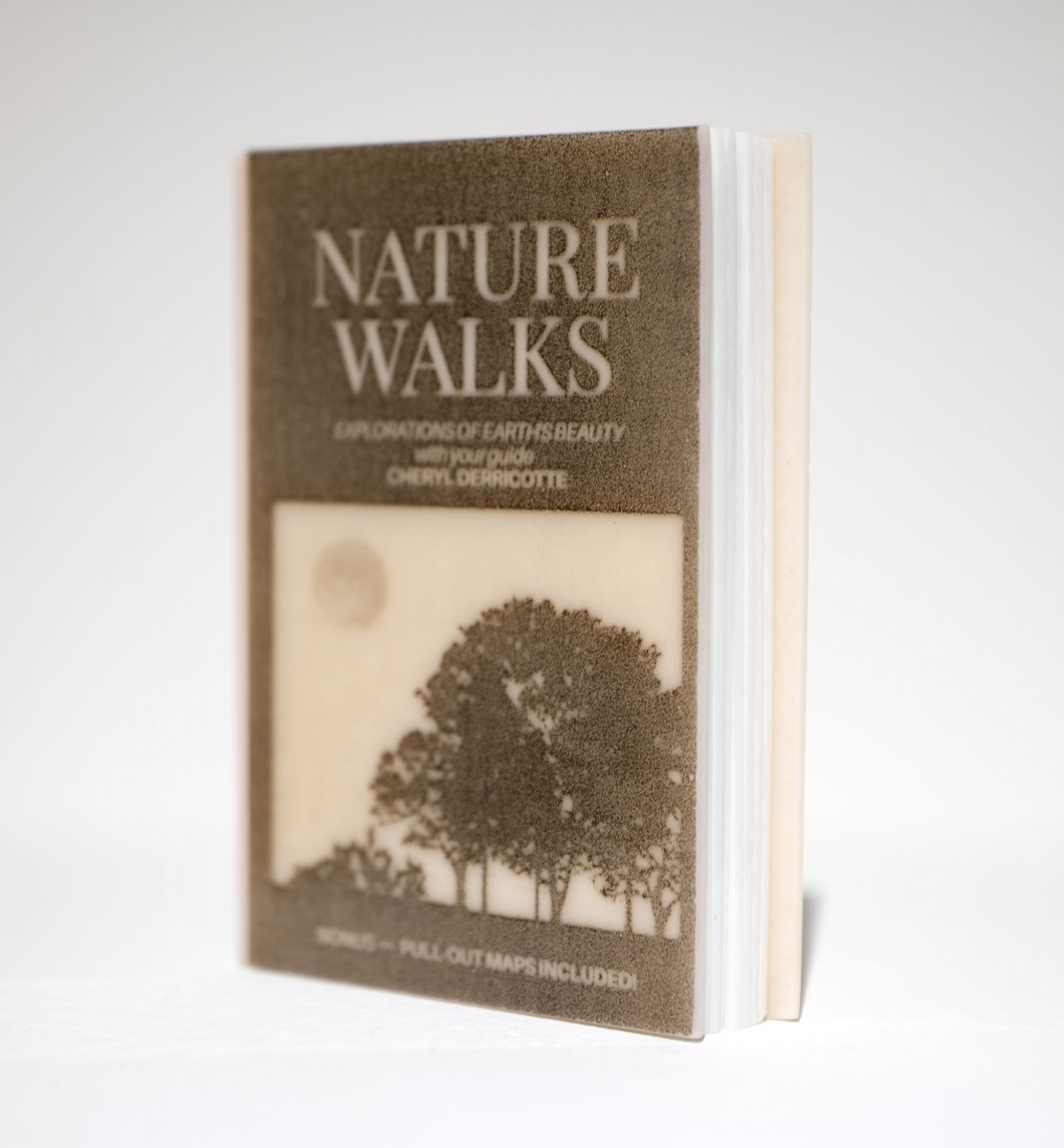
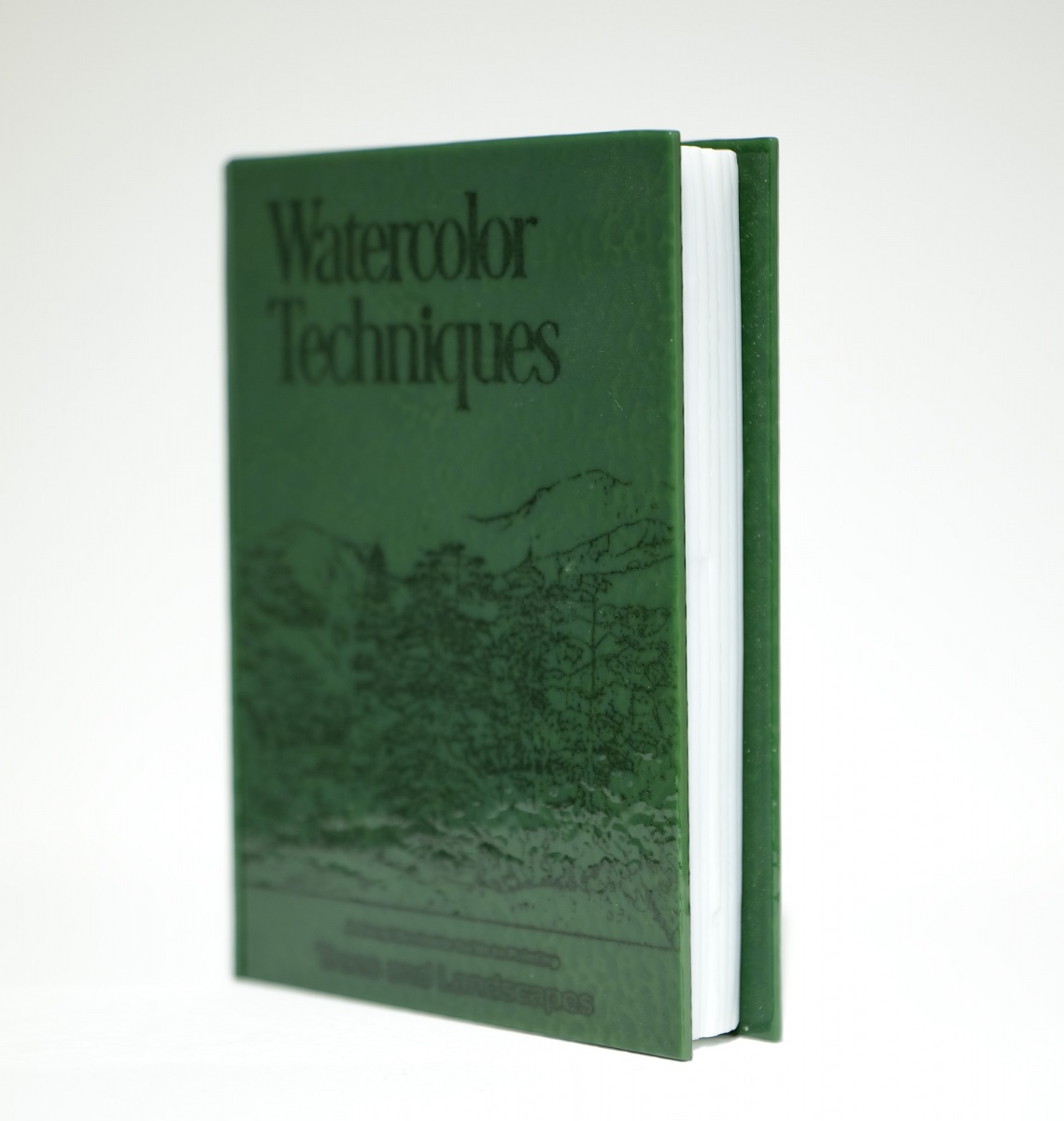
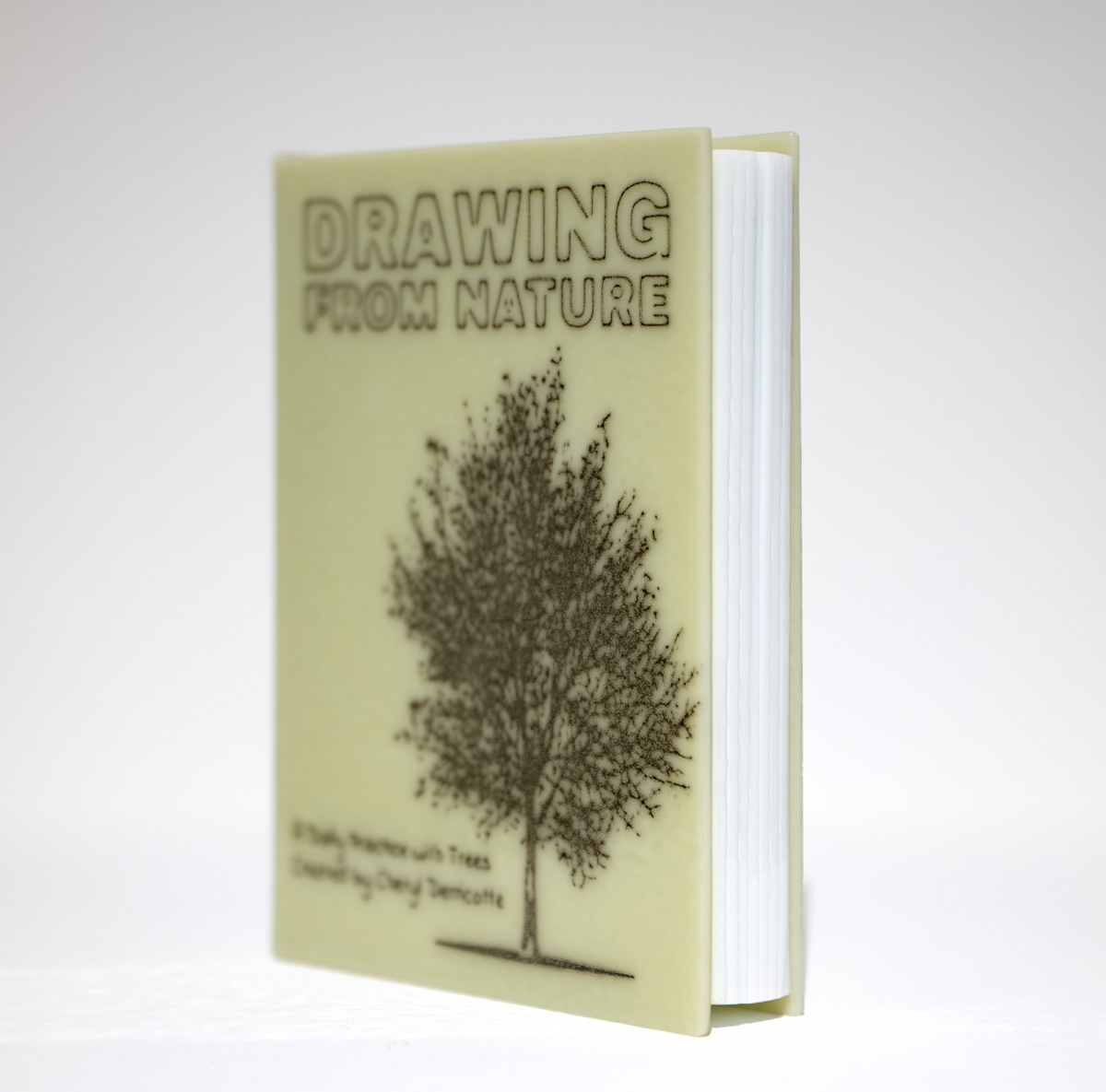
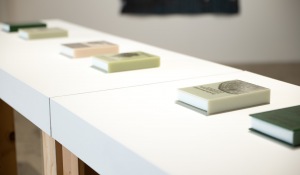
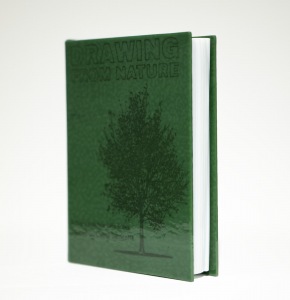
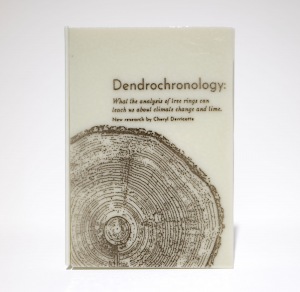
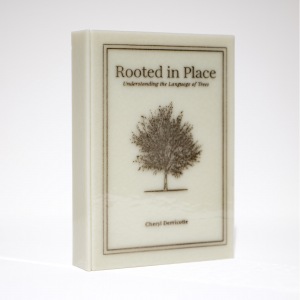
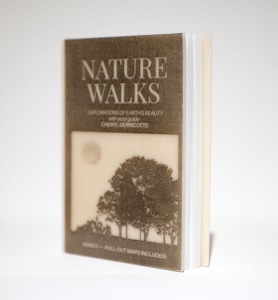
Cheryl Derricotte’s first sentence in her artist statement declares, “I do not often lead with beauty, but my work is well-crafted using beautiful materials.” Our perspective differs; not only are the glass books included in this exhibition stunning, they are thoughtful collaborators investigating race, environment, economics, politics, and community.
Derricotte’s glass, textile, and print work often honors forgotten Black female historical figures—women systemically erased from visibility. In 2022, she created a limited-edition artist book to elevate the accomplishments of Mary Ellen Pleasant, formerly enslaved, who became one of the richest Black women in Gold-Rush-era San Francisco. Derricotte made an elegant set of glass table settings in the manner of Pleasant, who was known for her exquisite dinner parties in support of abolitionists and reformation to end slavery.
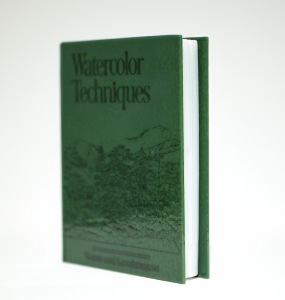
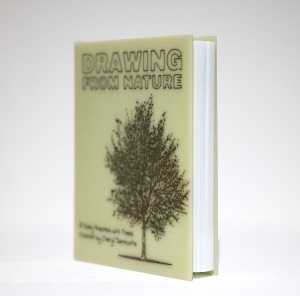
In 2026 Derricotte began making a series of glass books, with fictitious titles of her own design, such as Rooted in Place, Watercolor Techniques, and Nature Walks. The six books included in this exhibition reflect a range of topics, nothing of legend, until you understand the symbolic erasure of Black American inclusion in any avocation, let alone profession.
Cheryl Derricotte was the first recipient of the first BIPOC Residency at The Studio at the Corning Museum, Corning, NY. Other grants and residencies include the Windgate Craft Artist Fellowship/Residency, Vermont Studio Center, Johnson, VT, and the Black [space] Residency, San Francisco. Collections include the de Young Museum, San Francisco, CA; Museum of Glass, Tacoma, WA; Oakland Museum of California; San Francisco Archives/San Francisco Public Library; The Saint Louis (MO) Mercantile Library; and The Newberry Library, Chicago, IL

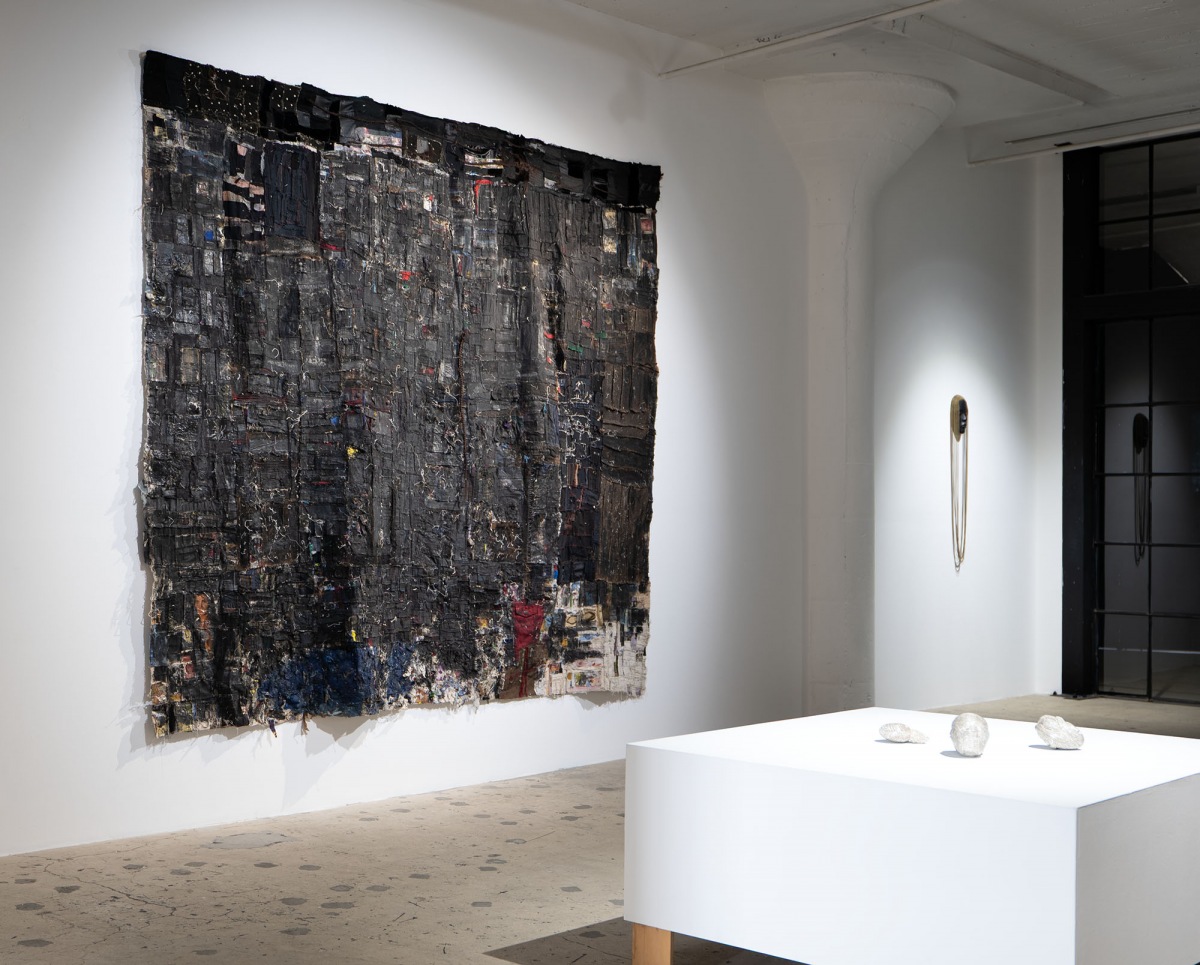
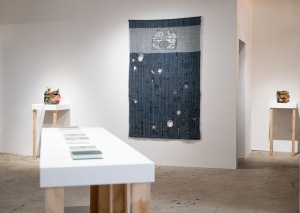
Karen Hampton’s tapestries included in this exhibition are apocryphal. Hampton spent years tracing her ancestry, knowing her surname was derived from the plantation where her African ancestors were enslaved. The Hampton plantation imprisoned her forebears as ‘property of the estate,’ hundreds of Black men, women, and children enslaved for generations. She swore never to visit the South Carolina property, but indeed, that is precisely what she did.
Sharing her research into her familial name and heritage with the plantation docents, they kindly offered Karen access to areas of the estate closed off to visitors. Alone and overwhelmed by the immensity of the injustice and trauma experienced by those enslaved on the property, she began to hear cries filtering through the creaking floorboards and walls. Those cries penetrated every fiber of her being. She descended the stairs, aware of the presence of spirits. Karen mentioned her experience to the docents, they too had heard the cries. Karen knew that 400 years of history could never be silenced.
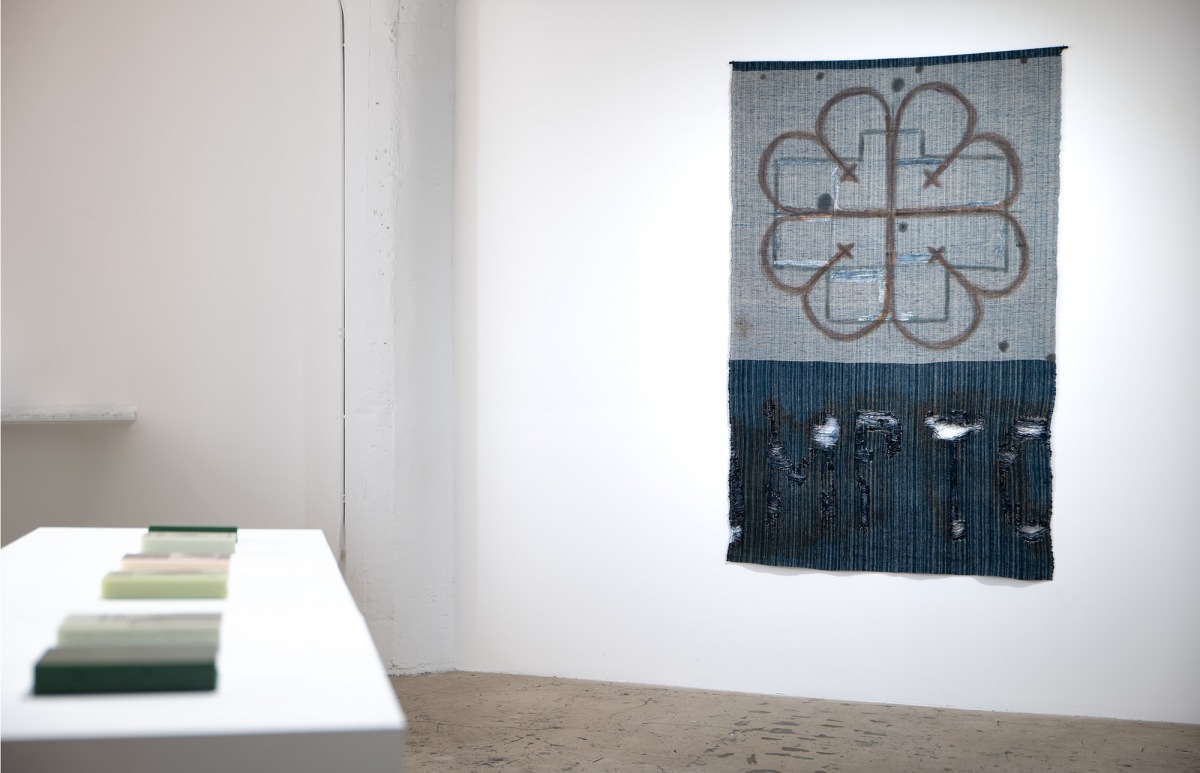
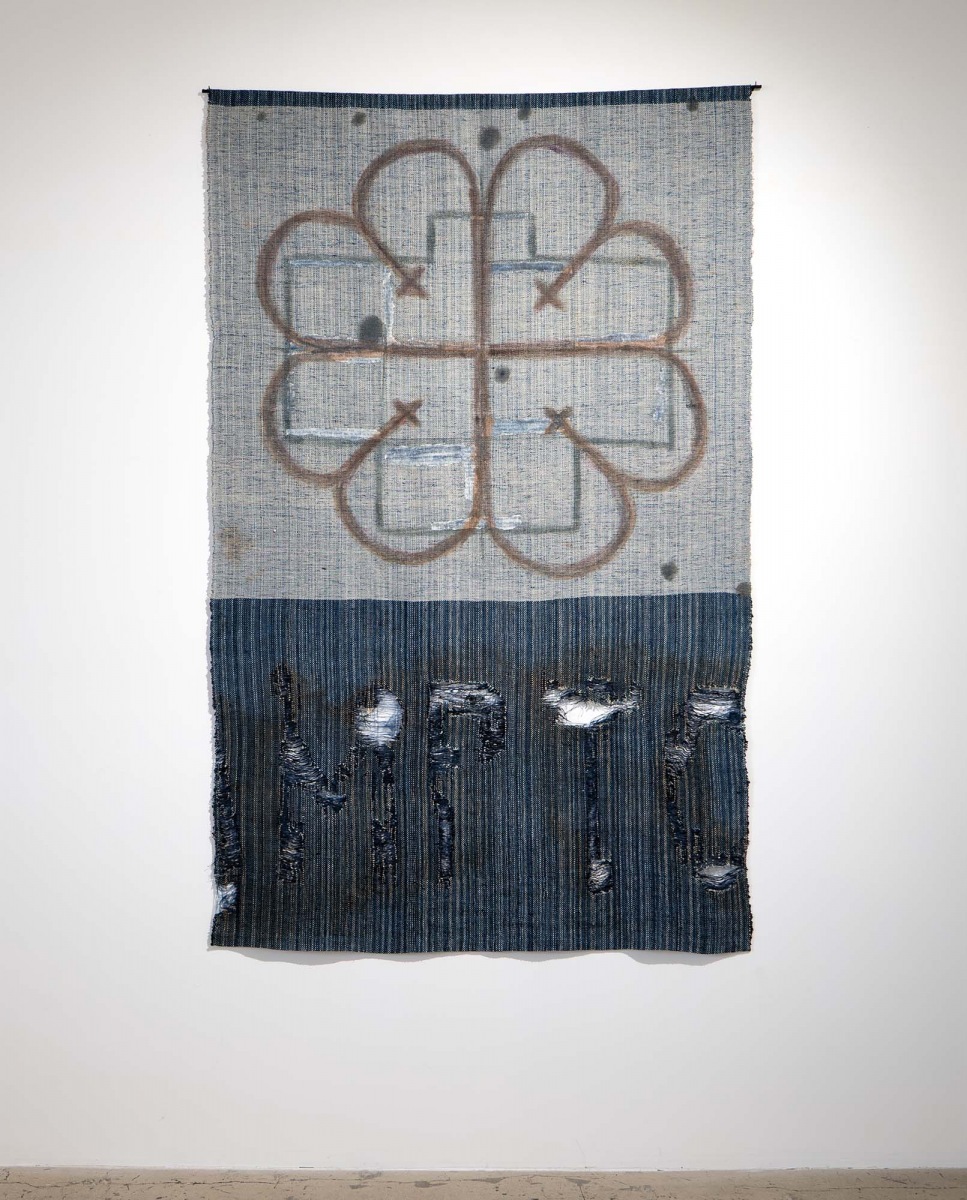
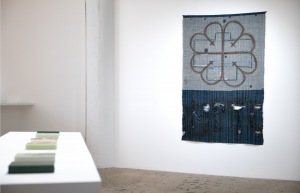
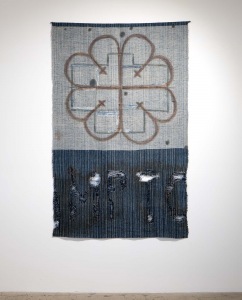
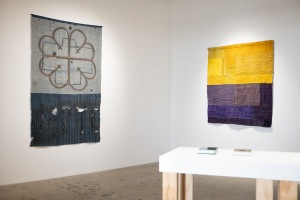
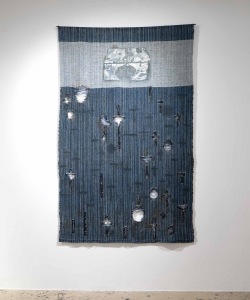
The dyed indigo tapestries presented in this exhibition, Ghost 1 and Ghost 2, offer psychic maps of the Hampton Plantation, a site where generational slavery has been restored as a state park—where spirits will never let history be erased.
Karen Hampton is held in the collections of the Ruth and Elmer Wellin Museum of Art, Hamilton College, Clinton, NY; the Honolulu Museum of Art, Honolulu, Hawaii; Chapman University, Orange, CA; Tia Collection, Santa Fe, NM; Museum of Fine Art, Boston, MA; Denver Museum of Fine Art, CO; University of Chicago, IL; and the School of the Art Institute of Chicago, Chicago, IL. Exhibitions include Art and Practice and California African American Museum, Los Angeles; University of Massachusetts-Dartmouth, MA; Museum of Craft and Folk Art, San Francisco; Honolulu Museum of Art, Honolulu, Oahu, Hawaii; Roberts Projects, Los Angeles and Jane Lombard, New York.

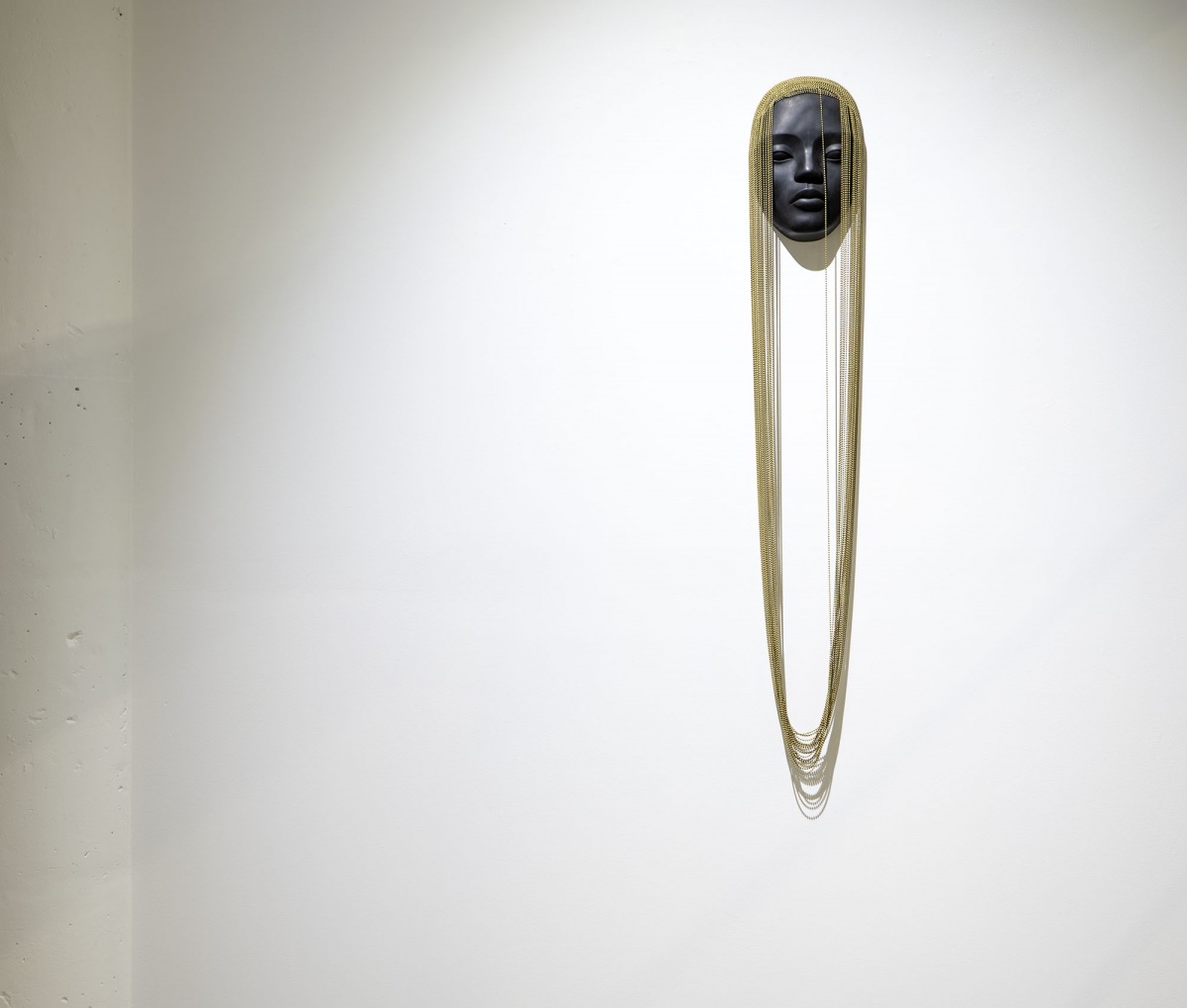
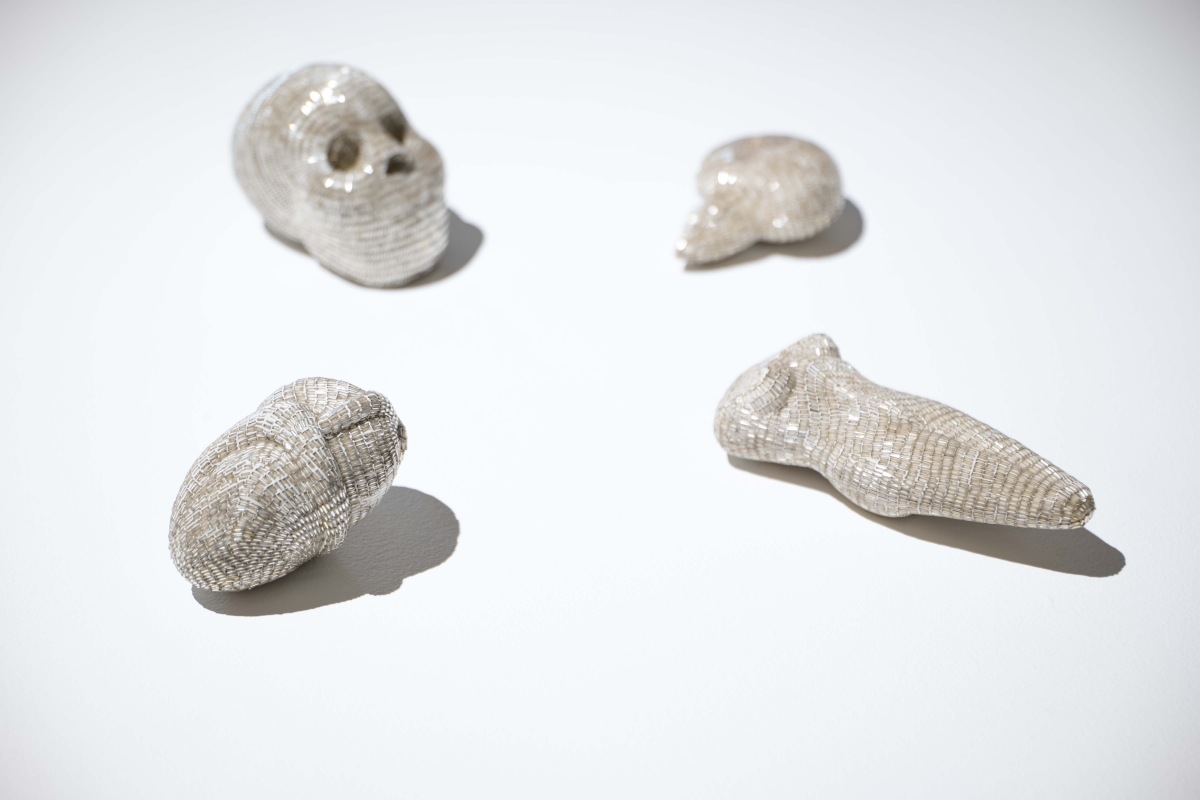
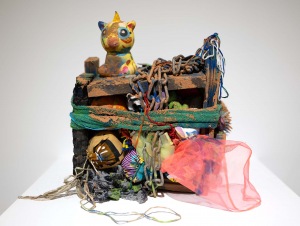
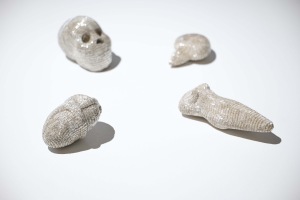
We’re pleased to include the sculpture of Esperanza Cortés, with selections from her Las Mineras and Cante Jando series. Cortés is a Colombian born multidisciplinary artist based in New York City. Cortés’ passion for the mosaic of the Americas, its folk-art traditions, rituals, music, and dance are at the core of her practice. On view will be free-standing and wall sculpture of clay and beads designed to counter the narratives of colonialism.
We’d also like to congratulate Esperanza on her upcoming exhibition at the Hispanic Museum and Library, New York. Esperanza Cortés: Embroidered Allegories, is the third exhibition in the museums Arte en el Alto Manhattan series, opening September 3rd, 2026.
Esperanza Cortés exhibitions include Smack Mellon Gallery; Bronx Museum of Art; Queens Museum; El Museo del Barrio; MoMA PS1; Socrates Sculpture Park in NYC; Albright-Knox Gallery; Ogden Contemporary Arts; Turchin Center for The Visual Arts; Corcoran Gallery of Art; Neuberger Museum of Art, and the Cleveland Art Museum. Awards include: New York State Council on the Arts Project Grant, John Simon Guggenheim Fellowship, Hispanic Society Museum and Library Artist Research Fellowship; BRIC Media Arts Fellowship, Lower Manhattan Cultural Council Grant; Joan Mitchell Foundation Painters & Sculptors Grant; Puffin Foundation Grant, New York State Biennial; Robert Rauschenberg Foundation; New York Foundation for the Arts and the Sustained Achievement in the Visual Arts Award.

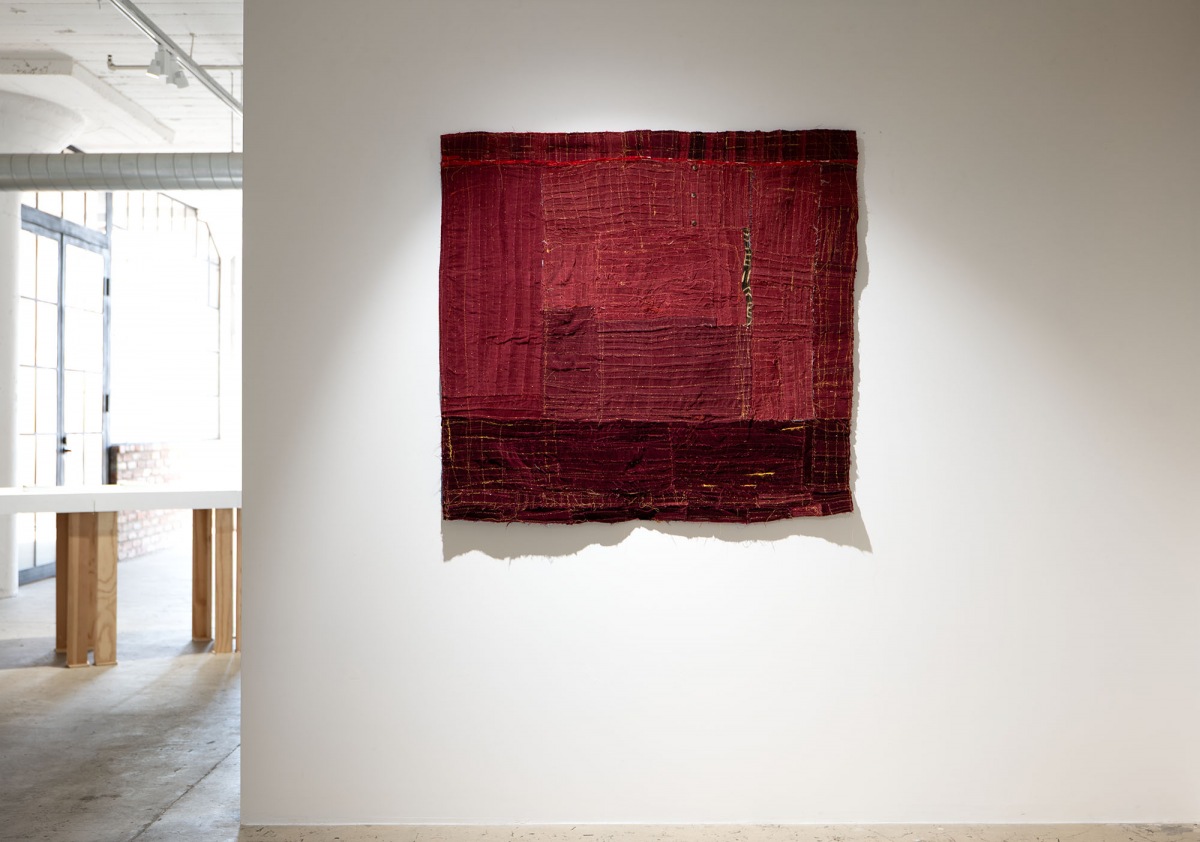
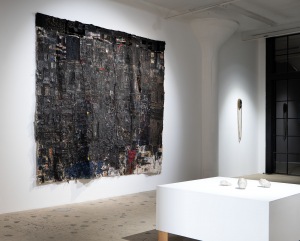
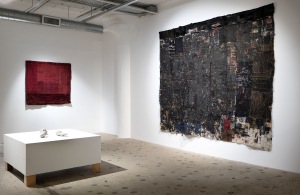
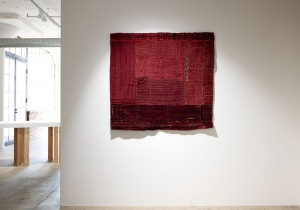
Asa Jackson presents monumental tapestries with soft undulating rivulets of hand-dyed corded cotton sewn with contrasting thread. The tapestries are composed of horizontal and vertical fields of color, while the shaved nap reflects and absorbs light, casting various depths of pigment. Gridded topography references weaving, early African American quilts, landscapes, maps, or even the cloaks of royalty. Occasionally Jackson reveals the reverse side of the tapestry, repurposed denim cotton. As Jackson notes, Indigo-dyed cotton served as the uniform of those enslaved and, in present-day use, still serves as the uniform for those incarcerated. Textiles often belie their storied histories.
Asa Jackson lives and works in Charlotte, North Carolina. He is the current President and CEO of McColl Center, North Carolina. He co-founded and served as Executive Director of the Contemporary Arts Network (CAN) Foundation, an arts nonprofit in Newport News, Virginia. Exhibitions include MoCA Arlington, the Virginia Museum of Contemporary Art and the Harvey B. Gantt Center in Charlotte. Jackson is included in public and private collections.

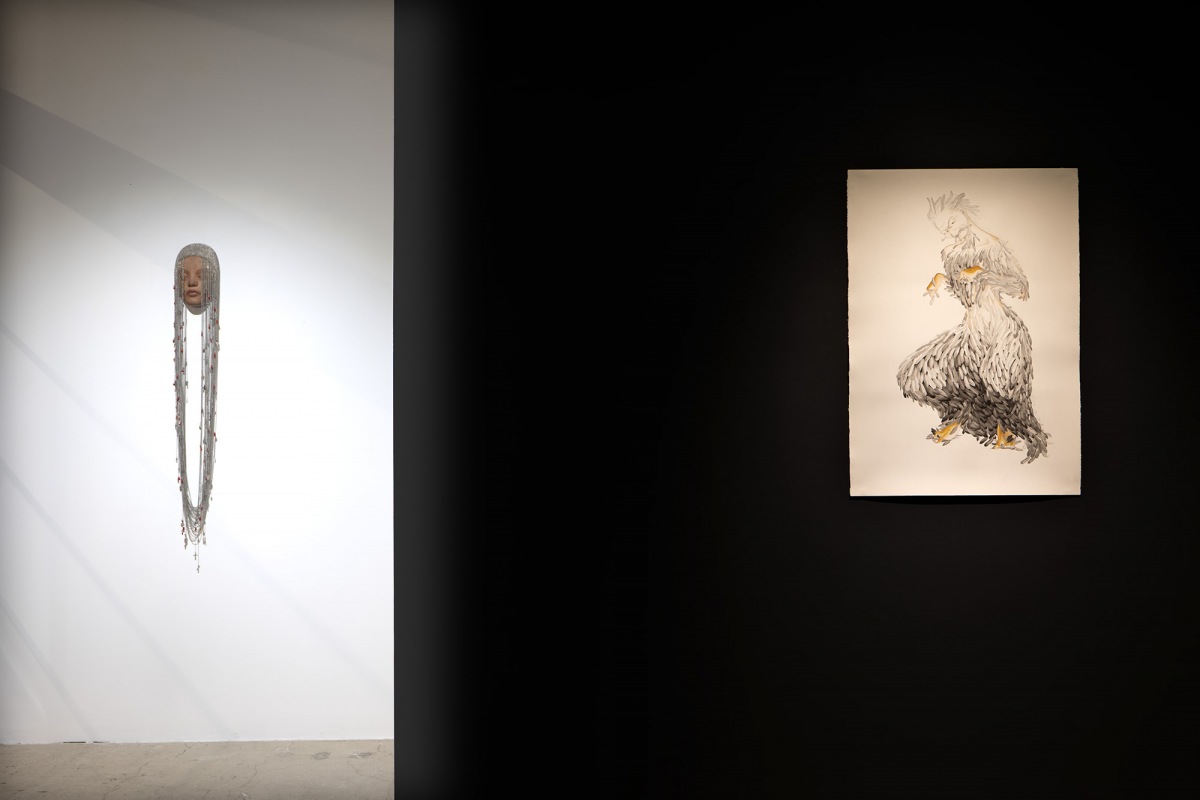
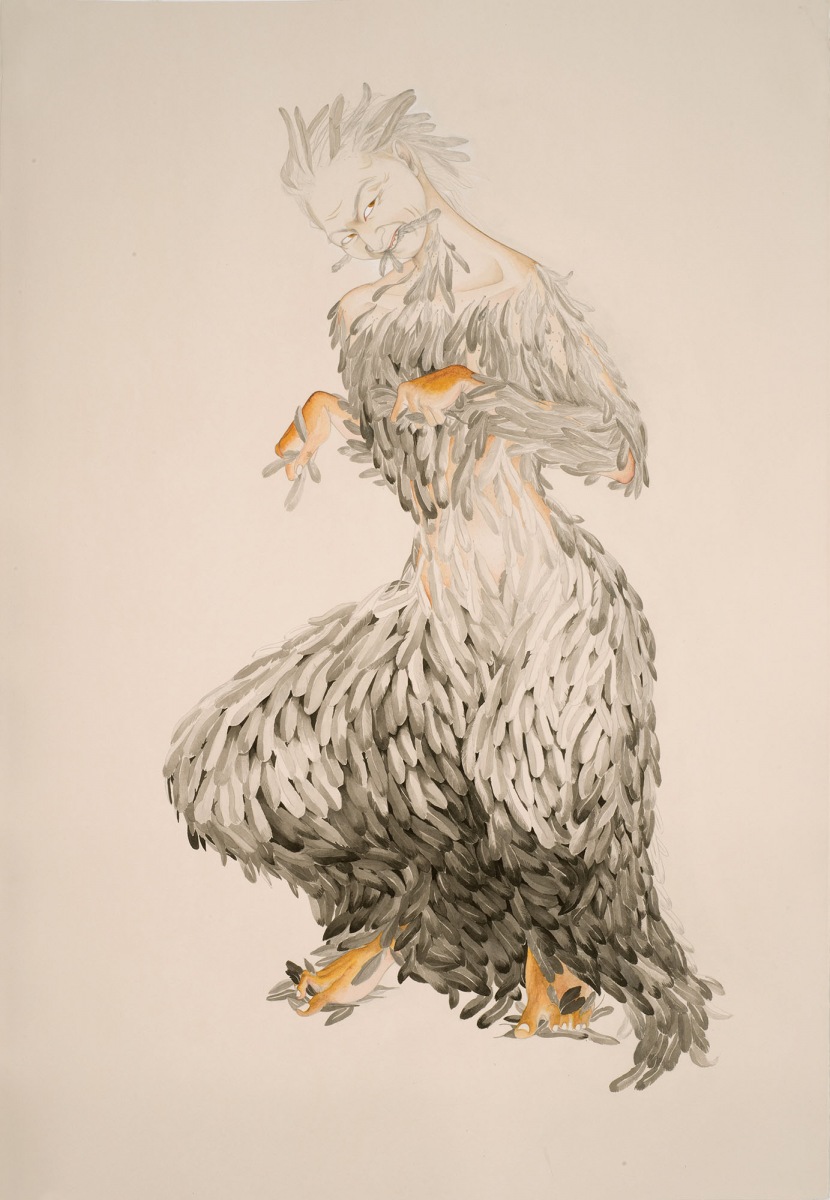
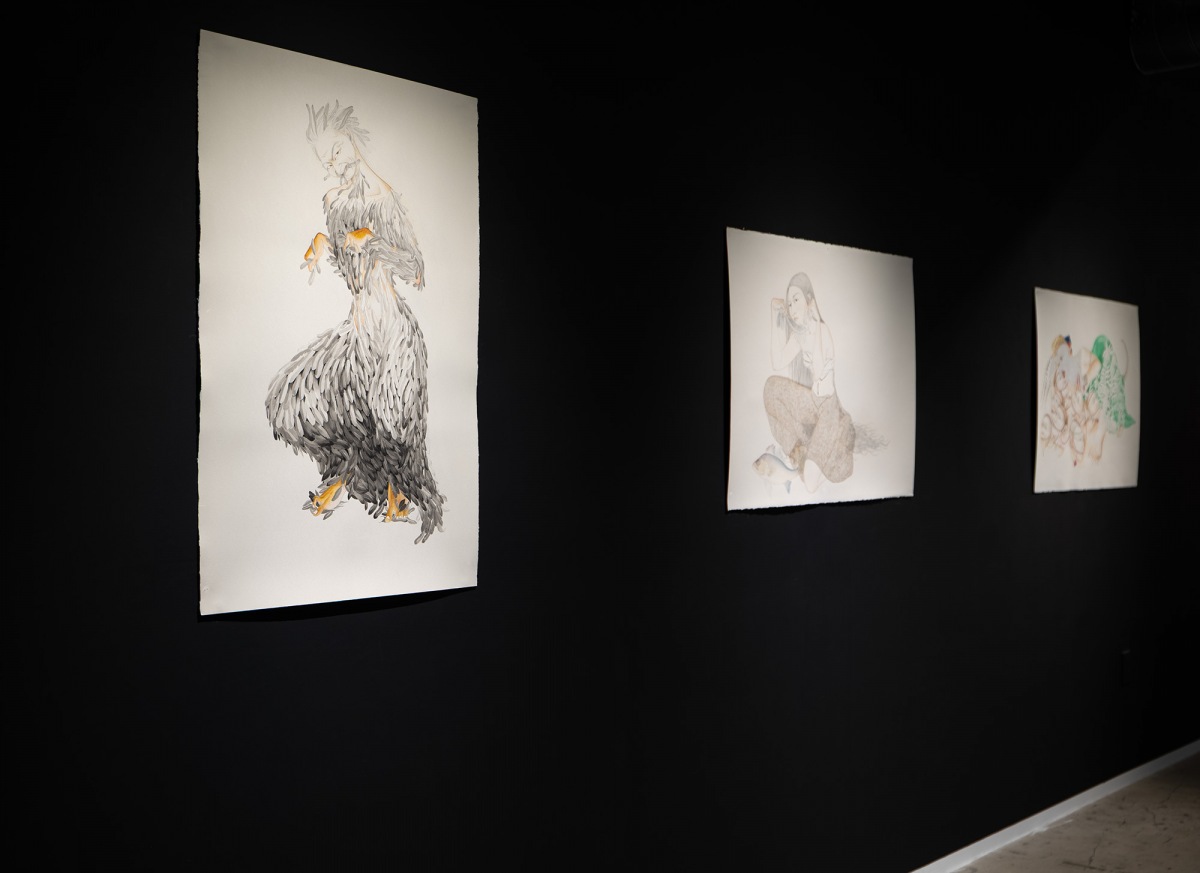
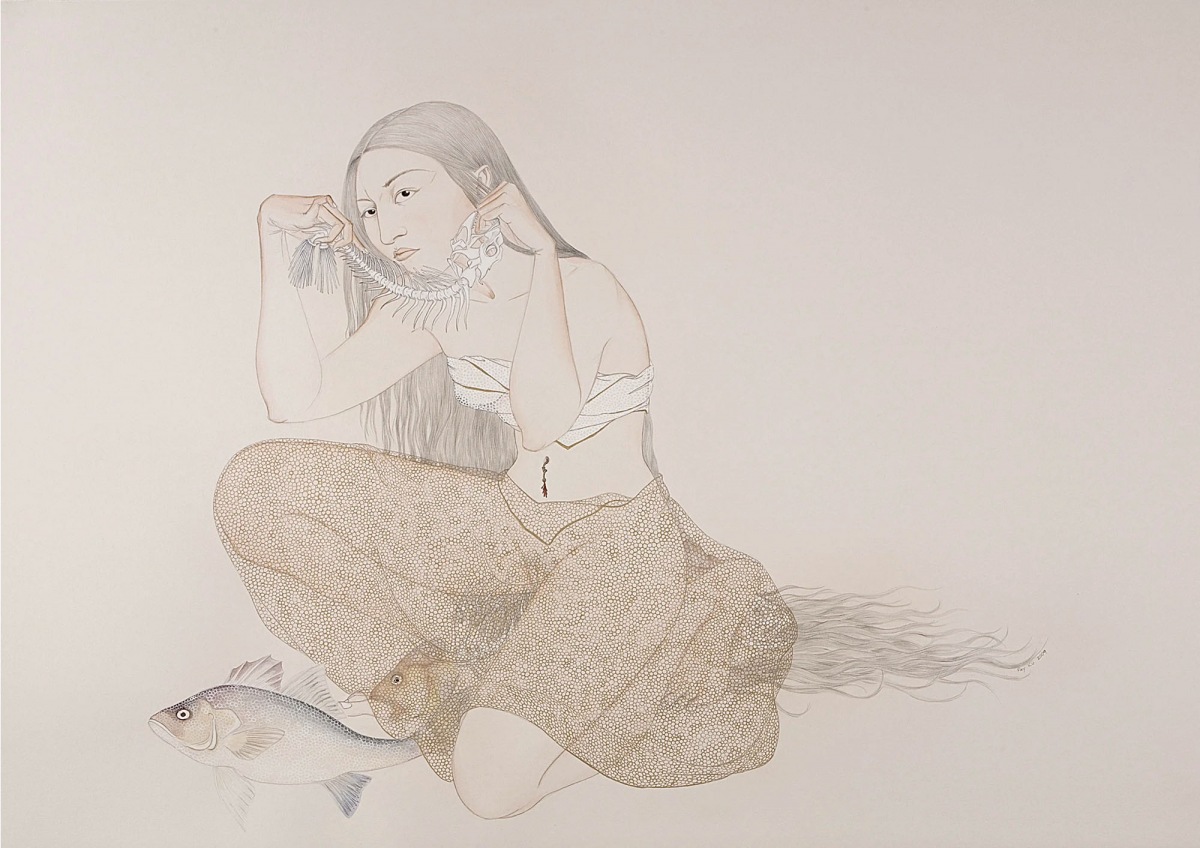
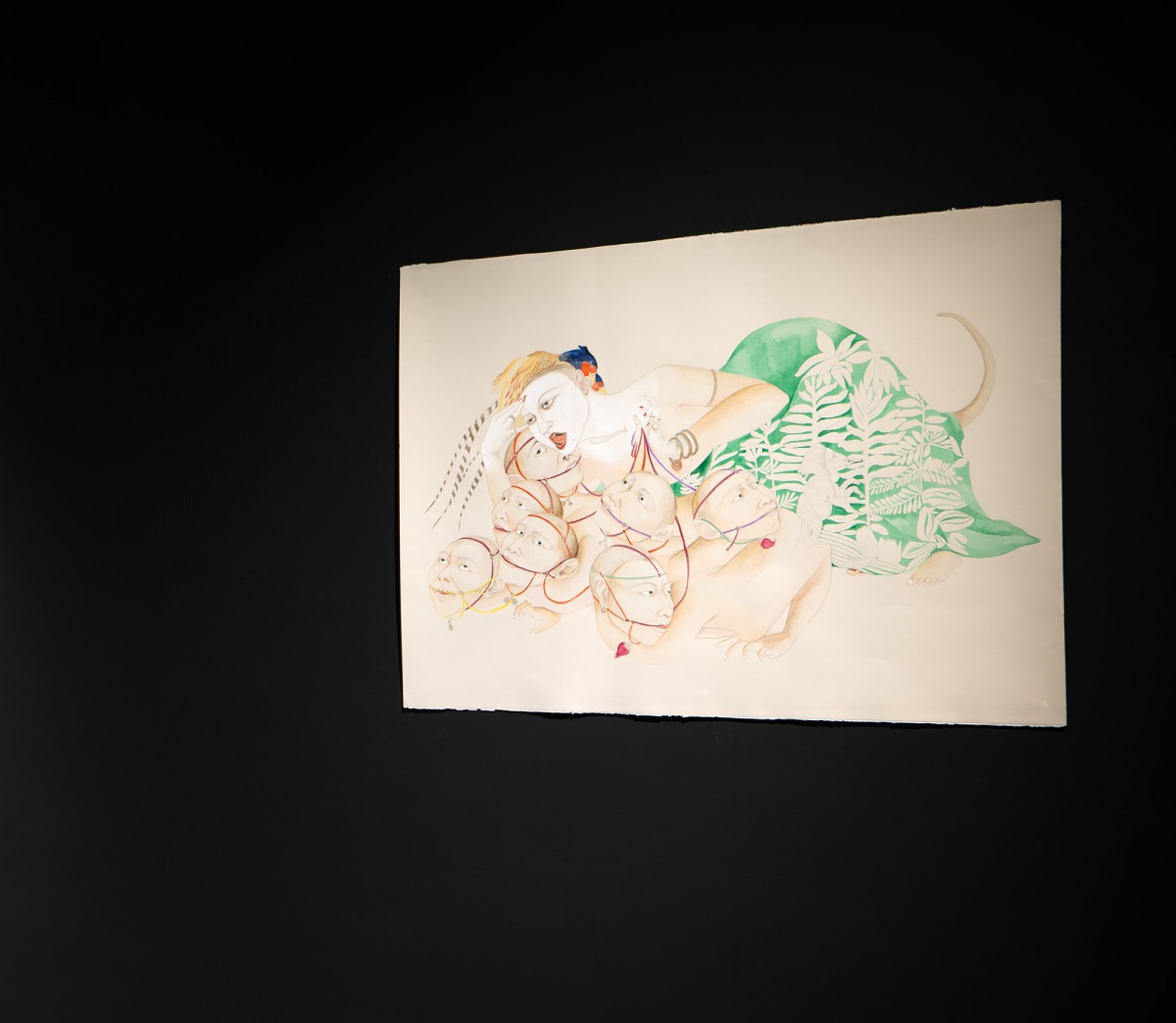
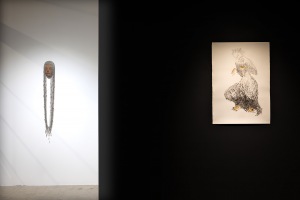
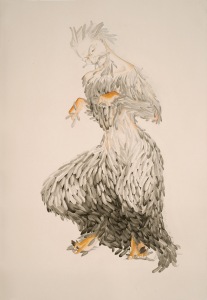
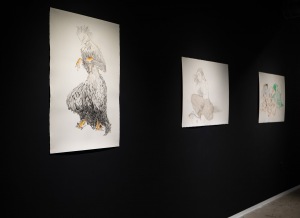
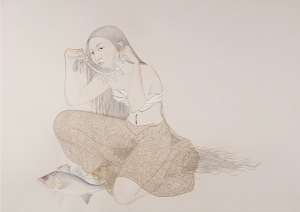
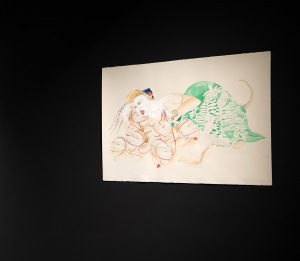
The drawings of Fay Ku emerge from the stories, myths, and fables told by her family. Emigrating from Taiwan, her parents lived and worked in Oklahoma and Texas, eventually making their way to Maryland. While they were settling in the states, Fay remained with her grandparents in Taiwan until the age of three, a community where she remembers feeling nurtured and loved. When her parents settled, she embarked upon the journey to join them, leaving familiarity behind.
For a few years after emigrating, Fay remained apart from the communities where she resided. She only spoke Mandarin, a language with one tense, the present tense. She learned English at elementary school, a vernacular that continuously dislocates time. Fay unwittingly began the journey of cultural accommodation, learning values, memories, and symbols of her parents and grandparents, while assimilating American culture.
Fay’s father, an avid student of history, was a natural story-teller. He wove memories and myths, sharing stories of China’s cultural revolution, describing comradery, loss, and violence along with tales of misadventure. The struggles and defiance of those who kept the travails of vulnerability at bay fueled Fay Ku’s imagination. Her drawings reflect that rich phantasmic tapestry replete with protagonists who conquer air and sea, take human and animal form, and distort dislocation with aplomb.
Fay Ku is the recipient of a 2007 Louis Comfort Tiffany Grant and a 2009 New York Foundation for the Arts fellowship grant. Her work is in the collection of Academy Art Museum, Easton, MD; Asian American Art Centre, New York; Honolulu Museum of Art, Honolulu, HI; Marjorie Barrick Museum of Art, Las Vegas, NV; The New Britain Museum of American Art, New Britain, CT, and The Wadsworth Atheneum, Hartford, CT. She is currently Adjunct Associate Professor at Pratt Institute in the Fine Arts department and for the Pratt in Venice summer abroad program.